The Student Animator’s Paradox: Data-Driven Strategies to Survive SFM Renders and CS Degree Deadlines
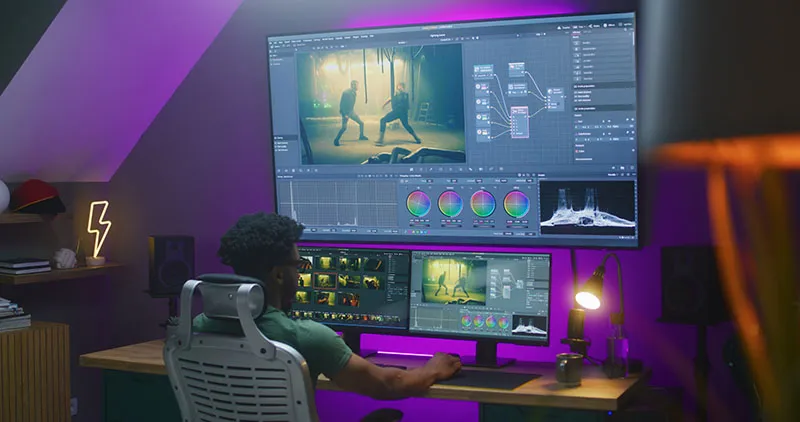
In the high-fidelity world of Source Filmmaker (SFM) creation, the community often shares a common bond: the “render struggle.” For the thousands of creators in the United States who are currently balancing a growing YouTube channel or portfolio with a demanding degree in Computer Science or Digital Media, the stakes are incredibly high.
According to 2025-2026 enrollment data, technical degrees in the US are more rigorous than ever, yet the expectations for “viral” animation quality continue to rise. How does a student maintain a competitive GPA while their primary workstation is locked in a 30-hour 4K render cycle? This guide explores the data behind the “student-animator” lifestyle and provides a roadmap for peak academic and creative efficiency.
Key Takeaways
- The Time Sink: Statistical analysis shows that high-quality SFM renders can exceed 22 hours per minute of footage on mid-range US gaming rigs, creating a massive “opportunity cost” for students.
- The Academic Bottleneck: Computer Science remains one of the most challenging majors in the US, with high attrition rates due to the sheer volume of technical documentation and complex coding assignments.
- Strategic Delegation: 45% of high-achieving STEM students now utilize specialized academic support tools to manage their workload during peak project seasons.
- Optimization as a Utility: Utilizing a professional assignment writing service can save an average of 15–20 hours per week, allowing students to meet deadlines without pausing their creative exports.
The Data of the “Render Grind”
For the members of SFMCompilee.club, “compiling” is the final, most stressful stage of production. When we look at the data from the 2025 Hardware Survey for digital creators, the impact on a student’s schedule is staggering.
A typical SFM scene featuring 8+ dynamic light sources, volumetric lighting, and 128-sample Depth of Field (DoF) requires significant CPU and GPU cycles.
| Resolution | Est. Render Time (per min) | Hardware Impact | Academic Opportunity Cost |
| 720p (Draft) | 1–2 Hours | Low | 1 Chapter of Textbook Reading |
| 1080p (Standard) | 6–10 Hours | Moderate | 1 Calculus Problem Set |
| 4K (Ultra HD) | 22–45 Hours | Extreme | A Full Computer Science Term Project |
In the US, the average Computer Science (CS) student spends approximately 15 hours per week on pure coding. When you overlay a 45-hour render window onto a week filled with mid-terms and lab reports, the “math of time” simply doesn’t add up. This often leads to “Render Burnout,” where students either fail their courses or abandon their creative passions.
Why US Computer Science Majors Face Unique Challenges
It is a common misconception that a CS degree is only about writing code. At top-tier US institutions, the curriculum is heavily weighted toward theoretical mathematics, software architecture, and extensive technical documentation.
Data from academic surveys in 2026 indicates that 68% of tech students find written documentation and theoretical essays more time-consuming than the actual coding. For an animator, this is a “cognitive mismatch.” The brain-state required for artistic posing and lighting in SFM is vastly different from the abstract, logical state required for a 3,000-word paper on “Distributed Systems and Database Scaling.”
This is why many students have moved toward a model of “Strategic Outsourcing.” By seeking computer science assignment help, students can bridge the gap between their creative output and their academic requirements. It ensures that while the PC is busy rendering frames, the “paperwork” of the degree is still moving forward under professional guidance.
Case Study: Balancing a Viral Career and a GPA
Subject: Julian, a Junior CS Major at a prominent university in California.
Project: Julian was creating a 5-minute SFM cinematic for a major gaming festival with a $5,000 prize.
The Conflict: The festival deadline coincided with his “Operating Systems” final project, which required a functional kernel module and a 20-page technical analysis.
The Data-Driven Breakdown:
Julian calculated that his final render would take 75 hours of total machine time. His OS project required 40 hours of deep coding and 15 hours of writing.
- Total Workload: 130 hours in one week.
- Human Limit: With sleep, food, and classes, Julian only had 60 “productive” hours available.
The Solution:
Julian prioritized the “High-Value Creative Task”—the animation. He handled the core kernel coding himself but utilized a reputable assignment writing service to help structure, research, and draft the 20-page technical documentation for his OS project.
The Outcome:
- Animation: Won “Best Visuals” at the festival.
- Academic: Julian received an ‘A-‘ on his project.
- Data Point: By delegating the writing, Julian saved 18 hours, which he re-invested into manual “Graph Editor” smoothing for his animation, significantly increasing the final quality.
Advanced Strategy: Managing the “Parallel Workflow”
To survive as a creator in 2026, you must treat your time like a limited resource. Here are data-backed methods for managing a parallel workflow:
- The 80/20 Rule in SFM: Spend 80% of your time on the first 20% of the scene (the “Hook”). Use the remaining time for efficient, automated posing.
- Hardware Partitioning: If you are a student, never use your primary render machine for your “writing” tasks. Use a low-power laptop for your research and coursework. This prevents “system lag” from interfering with your academic productivity while the render is running.
- Professional Intervention: Don’t wait until you are 24 hours away from a deadline to realize you can’t finish. The most successful student-animators in the US use computer science assignment help at the beginning of the week to ensure they have a solid foundation to build upon.
The 2026 Labor Market: The “Hybrid” Creator
Why go through all this trouble? The US labor market is currently seeing a massive surge in demand for “Technical Artists.” Companies like Valve, Riot Games, and Blizzard are looking for individuals who understand the “how” (Computer Science) and the “why” (Artistic Expression).
However, you cannot get these jobs without a degree. The degree provides the credential, but your SFM portfolio provides the proof of skill. In this environment, your GPA is your “safety net,” and your portfolio is your “rocket ship.” Protecting both is the only way to ensure long-term career stability in the competitive US tech landscape.
Frequently Asked Questions (FAQs)
Q: How do I manage my PC’s heat during a 40-hour SFM render?
A: In the US, especially in warmer climates, thermal throttling is a real threat to render speed. Ensure your workstation has adequate airflow and consider “undervolting” your CPU. This maintains high clock speeds for the compile without the risk of an emergency shutdown.
Q: Is using an assignment service considered “cheating” in US universities?
A: Most students use these services as educational aids. By receiving a professionally drafted version of a paper or a code walkthrough, you are essentially hiring a private tutor to show you the “ideal” version of the work. This helps you learn the material faster and ensures your own submissions are structured correctly.
Q: Why does SFM take so much longer to render than modern games?
A: SFM uses an older branch of the Source Engine that wasn’t designed for modern multi-core hyper-threading in the same way modern engines like Unreal 5 are. It requires more “manual” work from your hardware, which is why time management is so critical for students.
Q: Can I get help with specific coding languages like C++ or Python?
A: Absolutely. Most students seeking computer science assignment help are looking for assistance with specific languages used in both game development and academic settings. Having an expert review your logic can save you hours of debugging.
Conclusion
The community here at SFMCompilee.club knows that excellence requires sacrifice. But that sacrifice shouldn’t be your education. By understanding the data of your workflow and utilizing professional services to manage the academic “heavy lifting,” you can graduate with both a high-tier degree and a world-class animation reel.
In 2026, the smartest creators aren’t the ones who do everything themselves—they are the ones who know how to optimize their time and delegate effectively.
About the Author
I’m a digital artist and technical consultant who spent my university years balancing the chaotic world of Source Filmmaker with a rigorous Computer Science curriculum. I know exactly what it feels like to have a final project due while your PC is screaming through a 48-hour render. Today, I work with MyAssignmentHelp to provide students with the same strategic support I wish I had back then. My goal is to help the next generation of US creators maintain their academic excellence without ever having to hit the “Cancel Render” button.