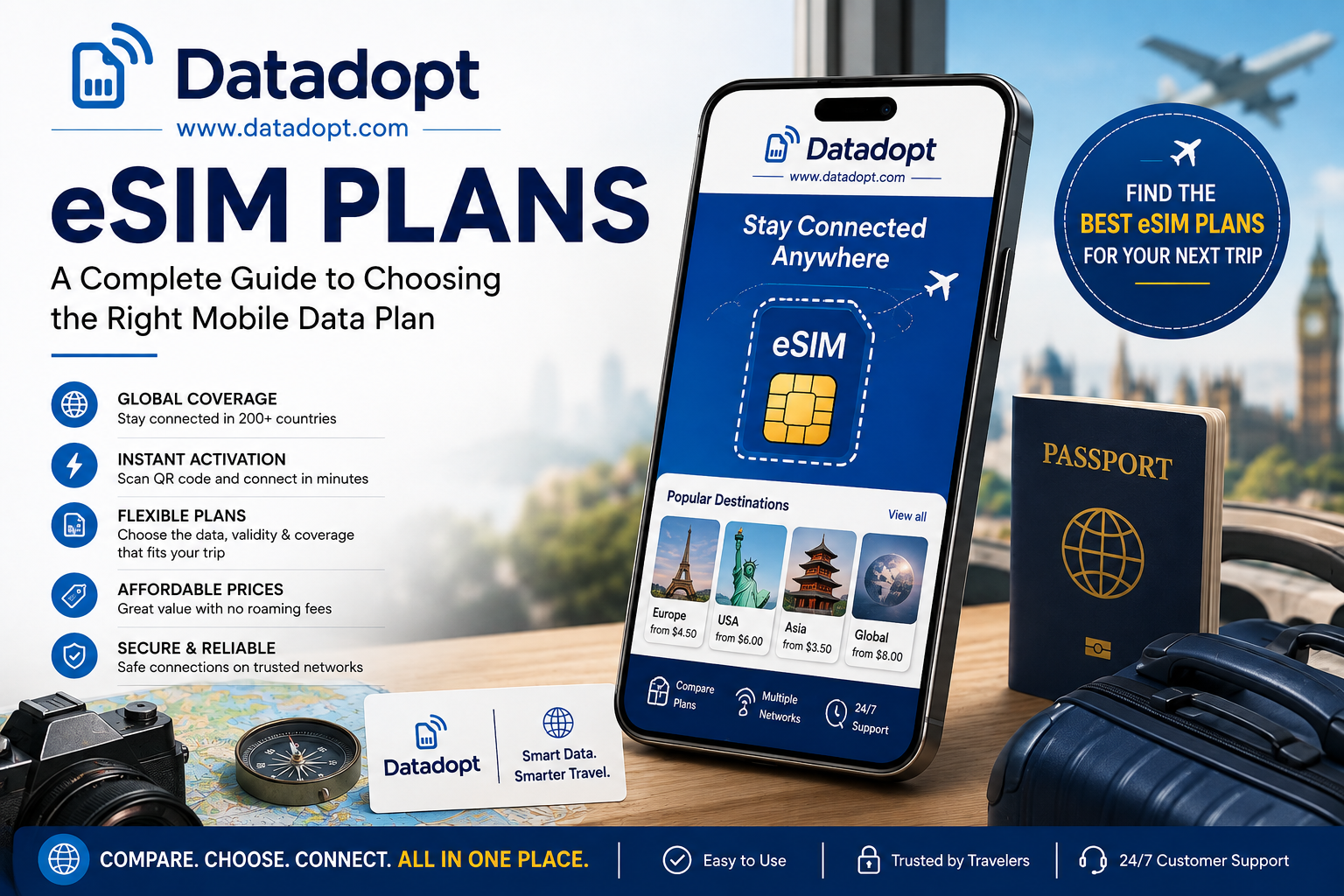
eSIM Plans for Travelers A Complete Guide to Choosing the Right Mobile Data Plan
Staying connected while traveling has become easier than ever with eSIM technology. Instead of purchasing and inserting a physical SIM card, travelers can activate a mobile plan directly on their compatible smartphone. This makes eSIMs a convenient option for international trips, business travel, and even everyday mobile connectivity. However, with so many providers and tpackages available, choosing the right plan can be challenging. Understanding what to look for can help you find the best eSIM plans for your needs and budget.
What Is an eSIM?
An eSIM, or embedded SIM, is a digital SIM built into a compatible device. Unlike a traditional SIM card, it does not need to be physically inserted into your phone. Users can purchase a mobile plan, scan a QR code or follow an activation process, and connect to a supported cellular network.
Many modern smartphones, tablets, and smartwatches support eSIM technology. Because there is no physical card to replace, switching between different plans can also be much simpler, particularly for people who travel frequently.
Why Are eSIMs Becoming So Popular?
One of the biggest advantages of eSIM technology is convenience. Travelers no longer need to search for a local mobile store after arriving at their destination. Instead, they can often purchase and activate their plan before leaving home.
Another benefit is flexibility. Many eSIM providers offer plans for individual countries, regions, or multiple destinations. This allows users to choose a package based on the length and nature of their trip.
eSIMs can also help reduce roaming costs. International roaming fees from traditional mobile carriers can become expensive, especially when using mobile data extensively. A travel eSIM can provide an alternative way to stay connected without relying entirely on a home carrier’s roaming service.
How to Choose the Right eSIM Plan
Not every eSIM plan is suitable for every traveler. Before purchasing one, it is important to consider several factors, including destination coverage, data allowance, validity period, network quality, and price.
Start by checking whether the provider supports your destination. A cheap plan is not useful if it does not offer reliable coverage where you are traveling. You should also consider how much data you are likely to use. Someone who mainly sends messages and checks maps may need far less data than someone who regularly streams videos or joins video meetings.
The plan’s validity period is another important consideration. Some packages last for a few days, while others remain active for several weeks or months. Choosing a validity period that matches your trip can help prevent unnecessary spending.
Compare Data Allowances and Prices
Price is naturally an important factor, but it should not be the only consideration. Two plans may have similar prices while offering very different amounts of data or coverage.
For light users, smaller data packages may be enough for messaging, navigation, email, and occasional browsing. Travelers who frequently use social media, stream content, or work remotely may benefit from larger packages.
It is also worth checking whether the plan offers unlimited data or has a daily or overall usage limit. Some unlimited plans may reduce speeds after a certain amount of high-speed data has been consumed, so reading the terms carefully can prevent unpleasant surprises.
Check Network Coverage and Speed
A strong data connection can make a major difference when traveling. Before buying an eSIM, check which local networks the provider uses in your destination. Access to a reliable network can improve browsing speeds, navigation, video calls, and other online activities.
Urban areas often have excellent mobile coverage, but connectivity can vary in rural locations, islands, mountainous regions, or other remote areas. If your trip includes multiple destinations, a regional plan with broad network coverage may be more practical than purchasing separate country-specific packages.
Make Sure Your Device Supports eSIM
Before purchasing any plan, confirm that your smartphone is eSIM-compatible and unlocked. Many newer devices support eSIM technology, but compatibility can vary depending on the model and region.
You should also check whether your device allows multiple SIM profiles. This can be particularly useful if you want to keep your regular phone number active while using an eSIM for mobile data during an international trip.
Consider Plans for International Travel
Frequent travelers may benefit from regional or global eSIM packages. Instead of purchasing a new plan every time they cross a border, they can use one package across several supported countries.
For example, someone traveling through several European countries may prefer a regional plan rather than buying individual plans for each destination. Similarly, business travelers visiting multiple countries in Asia or North America may find multi-country plans more convenient.
The right choice ultimately depends on your itinerary, data usage, and travel duration.
eSIMs for Remote Work and Business Travel
For remote workers and business travelers, reliable internet access is often essential. An eSIM can provide a convenient backup connection when hotel Wi-Fi or public networks are unreliable.
When selecting a business-oriented plan, look beyond the data allowance. Network reliability, connection speed, coverage, and the ability to use hotspot functionality can be equally important. If you regularly attend video conferences or transfer large files, choosing a plan with sufficient high-speed data is especially important.
Final Thoughts
eSIM technology has transformed the way people stay connected while traveling. With no physical SIM card to install, flexible packages, and coverage available in many destinations, eSIMs offer a practical alternative to traditional roaming.
The ideal plan depends on your destination, travel duration, expected data usage, device compatibility, and budget. Rather than choosing the cheapest option available, compare coverage, speeds, data limits, validity, and network support before making a decision. By considering these factors carefully, you can choose an eSIM plan that keeps you connected without unnecessary costs or complications.