Polygraph Test: What It Really Measures (and What It Doesn’t)
There’s something almost cinematic about a polygraph test. The wires, the steady hum of a machine, the examiner watching closely while someone answers yes-or-no questions. It feels like truth has a physical form, like honesty can be graphed in real time.
But here’s the thing—polygraphs don’t actually detect lies. They detect something messier: human reactions.
And that difference matters more than most people realize.
The basic idea sounds simple
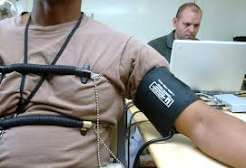
At its core, a polygraph measures physiological responses. Heart rate, breathing patterns, blood pressure, sometimes even skin conductivity. The idea is that when you lie, your body reacts—subtle stress signals show up whether you want them to or not.
So if your pulse spikes or your breathing shifts when you answer a question, that could be a sign you’re not telling the truth.
Sounds straightforward, right?
Except real humans aren’t that predictable.
Imagine someone being asked, “Did you steal the money?” If they’re innocent but terrified of being wrongly accused, their body might react just as strongly as someone who actually did it. Anxiety doesn’t politely separate itself into “guilty” and “innocent” categories.
That’s where things start to get complicated.
How a polygraph test actually works
A typical session isn’t just a series of random questions. It’s carefully structured.
First comes a pre-test interview. This part is longer than most people expect. The examiner explains the process, asks background questions, and sets expectations. They’re also watching—how you speak, how you react, how comfortable you seem.
Then comes the test itself. You’ll usually get a mix of three types of questions:
- Relevant questions (directly about the issue)
- Control questions (broad, emotionally charged but unrelated)
- Neutral questions (simple facts like your name)
Here’s a small example:
“Is your name Daniel?” (neutral)
“Have you ever lied to get out of trouble?” (control)
“Did you take the missing cash from the office?” (relevant)
The examiner compares your physiological responses across these types. The idea is that a deceptive answer to a relevant question will produce a stronger reaction than a control question.
But again—this relies on assumptions about how people react under pressure.
The uncomfortable truth: it’s not a lie detector
Let’s be honest. Calling it a “lie detector” is more marketing than science.
Polygraphs measure stress, not deception. And stress comes from all sorts of places.
Someone might react strongly because:
They’re nervous about being judged
They’ve had bad experiences with authority
They simply hate being tested
They’re worried they won’t be believed
Or, on the flip side, someone who’s lying might stay calm. Maybe they’ve rehearsed. Maybe they don’t feel guilt the same way others do. Maybe they’re just good under pressure.
There’s a reason polygraph results are generally not admissible in court in many places. The margin for error isn’t small enough to confidently decide someone’s fate.
That doesn’t mean they’re useless. It just means they’re not what people think they are.
Why organizations still use polygraphs
If the science is shaky, why do they still exist?
Because they can still be effective in a different way.
A polygraph test is as much a psychological tool as it is a physiological one. The setup itself creates pressure. Sitting in that chair, hooked up to sensors, being told that your body will reveal the truth—it affects people.
Some individuals confess before the test even begins.
Others reveal inconsistencies during questioning.
So in practice, the polygraph often works as an interrogation aid rather than a pure detection device.
Law enforcement agencies, intelligence organizations, and even some private employers use it for this reason. It’s not about catching lies directly. It’s about creating an environment where truth becomes easier—or harder to hide.
What it feels like to take one
People tend to imagine it as intense and dramatic. In reality, it’s often slower and quieter than expected.
You sit still. Very still. Movement can interfere with the readings, so even small shifts are discouraged. The examiner asks questions in a steady, controlled tone. No yelling. No theatrics.
But internally, it’s a different story.
You start noticing your breathing. Then you worry about your breathing. Which, ironically, changes your breathing.
You wonder if your heart is beating too fast. Now it is.
Even completely harmless questions can feel loaded.
A friend once described it like this: “I felt guilty answering things I knew were true, just because I was overthinking everything.”
That’s a pretty common experience.
Can people “beat” a polygraph?
This is one of the most talked-about aspects, and opinions vary widely.
Some believe it’s easy to manipulate the results. Others think it’s nearly impossible without training.
There are known techniques people try. Controlling breathing patterns. Creating small physical discomfort during control questions (like pressing toes into the floor). Mentally altering emotional responses.
The idea is to distort the baseline so that relevant questions don’t stand out as much.
Do these methods work?
Sometimes. But not reliably.
Experienced examiners are trained to spot unusual patterns. And trying too hard to control your responses can actually make things look more suspicious.
There’s also a paradox here. If you’re focused on “beating the test,” you’re probably increasing your stress, which can backfire.
So while it’s not foolproof, it’s also not something you can casually outsmart just by reading a few tips online.
The role of the examiner matters more than you think
Two different examiners can look at the same data and reach different conclusions.
That’s not a flaw in individuals—it’s a reflection of how subjective interpretation can be.
Polygraph charts aren’t like a clear yes-or-no printout. They require analysis. Judgment. Context.
Some examiners lean conservative. Others are more confident in calling deception.
And their interaction style plays a role too. A calm, neutral examiner creates a different environment than one who’s more intense or confrontational.
So the outcome isn’t just about your body’s responses. It’s also shaped by the human reading them.
Real-world uses (and misuses)
Polygraphs show up in more places than people expect.
Law enforcement uses them in investigations. Intelligence agencies use them for security screenings. Some companies use them in internal theft cases.
There are also more unusual settings—relationship disputes, private investigations, even reality TV shows.
Yes, really.
But this is where things get tricky.
In high-stakes situations, relying too heavily on polygraph results can lead to bad decisions. False positives happen. So do false negatives.
Someone might “fail” despite telling the truth. Another might “pass” despite being deceptive.
That’s why most professionals treat polygraph results as one piece of a larger puzzle, not the final answer.
A quick reality check
If you’re ever asked to take a polygraph, it’s worth understanding what it can and cannot do.
It cannot read your mind.
It cannot directly detect lies.
It cannot guarantee accuracy.
What it can do is measure how your body reacts under questioning—and that information can be interpreted in different ways.
That might sound less impressive than the myth, but it’s more honest.
So, should you trust a polygraph?
Trust is probably the wrong word.
A polygraph can provide clues. It can highlight inconsistencies. It can even encourage honesty in some situations.
But it shouldn’t be treated as definitive proof of truth or deception.
Think of it like a flashlight in a dark room. It can help you see more, but it doesn’t reveal everything—and sometimes it casts shadows that weren’t there before.
The takeaway
Polygraph tests sit in an odd space between science and psychology. They’re not magic truth machines, but they’re not meaningless either.
They work best when understood for what they really are: tools that measure human response, shaped by context, emotion, and interpretation.
And if nothing else, they’re a reminder of something simple but easy to forget—truth isn’t always as measurable as we’d like it to be.